

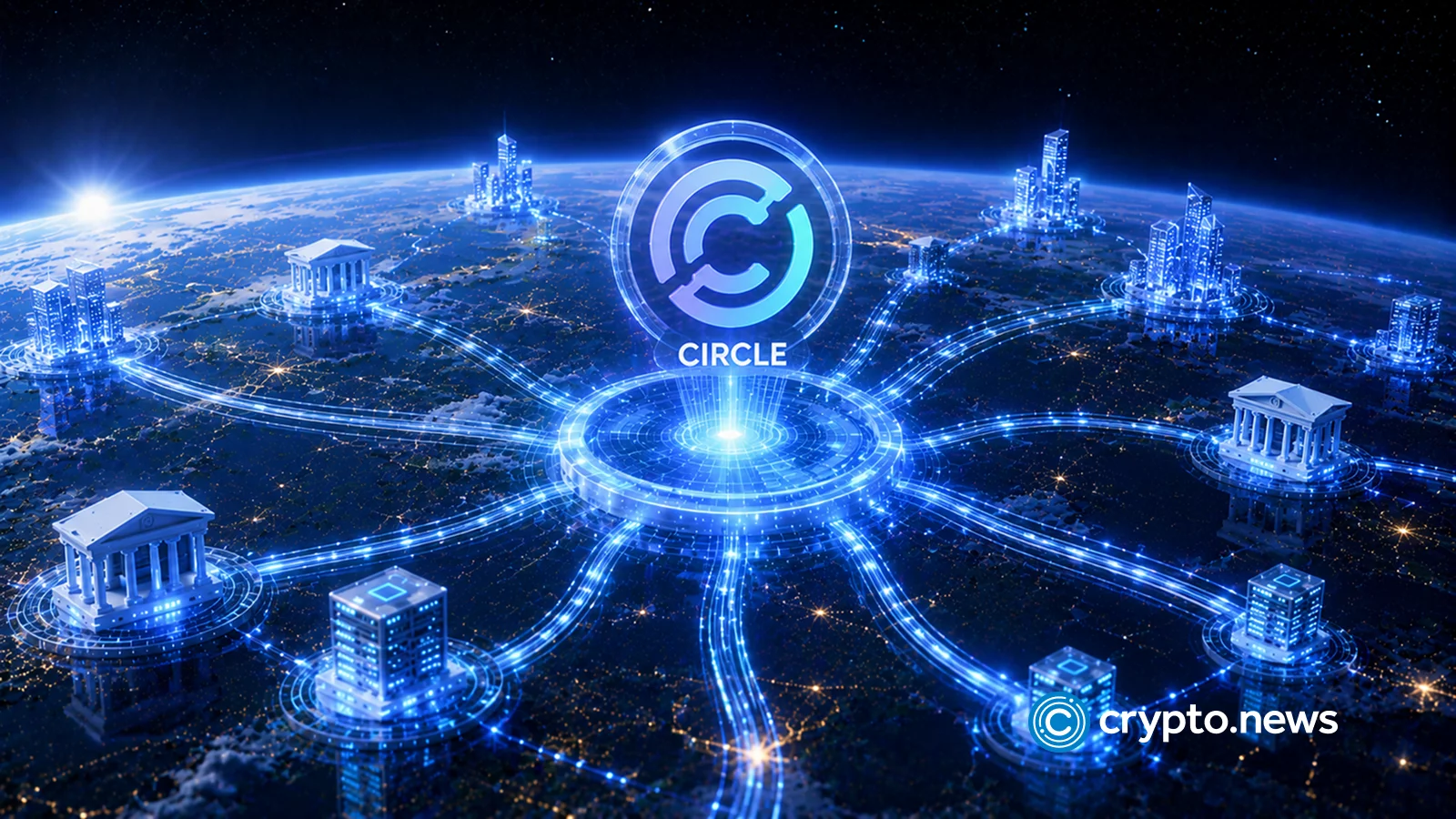
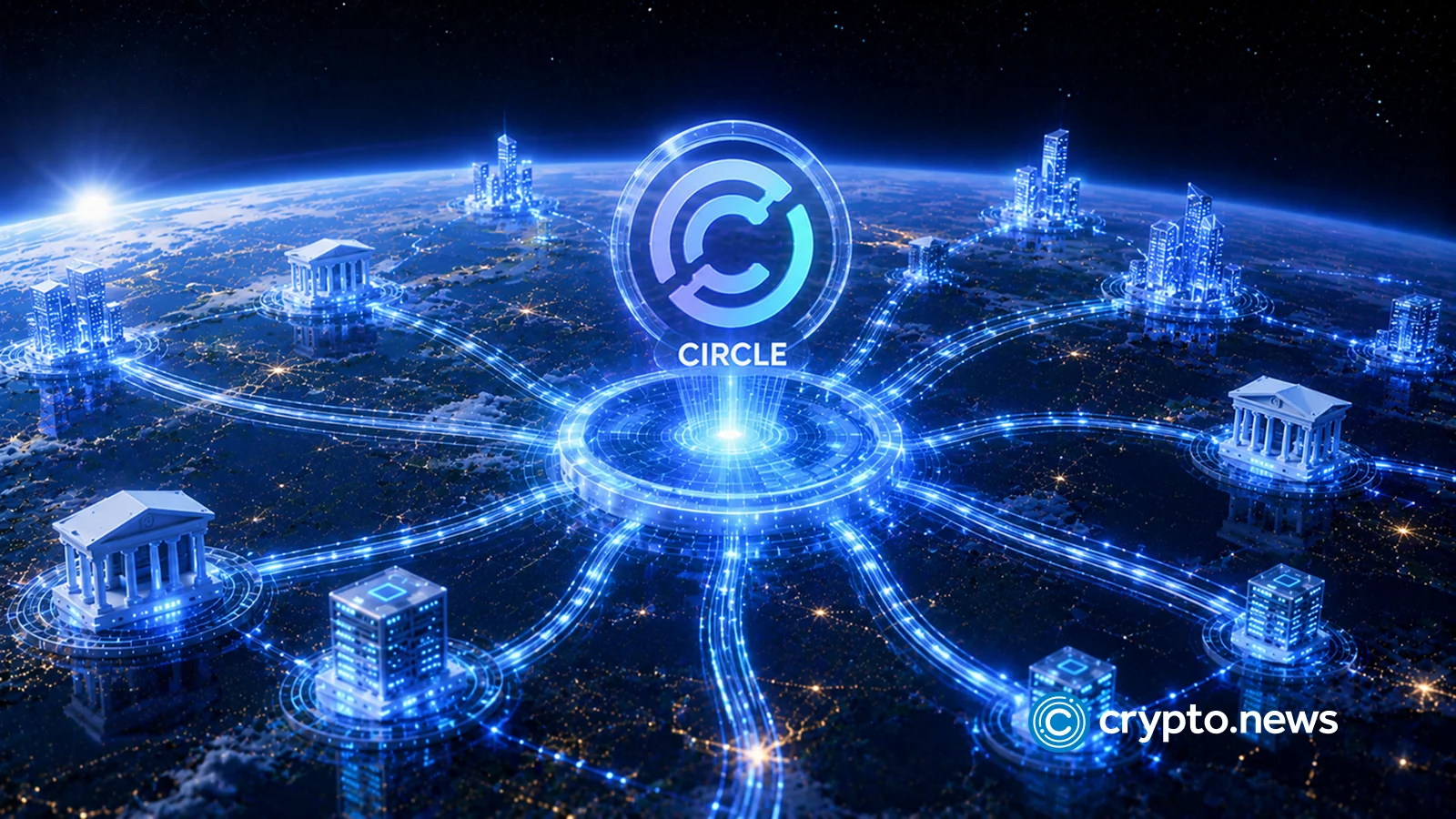
On June 30, more than 140 companies, including Visa, Mastercard, Stripe, BlackRock, Google, and Circle’s most important ally, Coinbase, unveiled a stablecoin designed to give away the exact revenue stream Circle lives on. CRCL cratered 17% in a day and is down nearly 40% on the month. This is the story of how a moat made of partnerships gets drained by the partners.
Summary
- More than 140 major firms backed Open USD, a shared-economics stablecoin that directly challenges Circle’s reserve-yield business model.
- Circle’s stock plunged after the launch, as investors priced in the risk of partners capturing stablecoin reserve income themselves.
- Circle still has defenses in regulation, liquidity, and trust, but OUSD could pressure its margins and partner leverage.
The most dangerous sentence in Circle’s business model was always hiding in plain sight, in its own filings: nearly all of the company’s revenue comes from interest earned on the reserves backing USDC. Not fees. Not technology. Interest. Circle holds tens of billions of dollars of customer money, parks it in United States Treasuries, and keeps the yield, a business so profitable and so simple that the only real question was how long the companies generating that float would let someone else collect it.
On June 30, the answer arrived. A consortium of more than 140 companies announced Open USD, a dollar stablecoin with free minting and redemption, shared governance, and, most importantly, reserve income distributed back to the participants instead of retained by an issuer. The backer list reads like the org chart of global payments: Visa, Mastercard, American Express, Discover, and Stripe from the card and processing world; BlackRock, BNY, Standard Chartered, BBVA, Mizuho, U.S. Bank, and DBS from asset management and banking; Google, Samsung, IBM, and Shopify from technology; and Coinbase, Ripple, OKX, Bybit, Gemini, Fireblocks, Anchorage Digital, MetaMask, Aave, Solana Labs, and Polygon from crypto.
The market read the announcement correctly and instantly. Circle’s stock fell as much as 18% intraday and closed down 17.55% at $62.63, its worst day since March, extending the monthly drawdown to 39%. The launch was the top trending story in crypto by nightfall, and the one-line verdicts wrote themselves: Circle’s closest partners had gathered in a room and designed its replacement.
The stock’s full 2026 chart shows a company the market keeps re-underwriting shock by shock. The March 20% plunge came on a draft proposal threatening the yield model from the regulatory side; June’s came from the commercial side; between them, the shares have swung on every headline touching reserve economics, because a business this concentrated converts every threat to one revenue line into a threat to the whole valuation. Wall Street’s consensus target near $120, roughly 91% above the post-crash price, is less a disagreement about the facts than about the timeline: the analysts are pricing the years OUSD needs to actually ship and scale, while the tape prices the strategic position, which changed in an afternoon.
The reality is more layered than the verdict, and more interesting. Here is how the stablecoin business actually works, why the consortium model attacks it at the load-bearing wall, and what Circle can still do about it.
A beautiful business with one assumption
Circle’s economics are worth spelling out, because they explain both the 91% analyst upside targets before the announcement and the 17% single-day repricing after it.
USDC circulates around $73 billion. Circle invests the reserves behind those tokens in short-term Treasuries and cash equivalents, and at prevailing rates that float generates several billion dollars a year, roughly 96% of company revenue. The model has effectively no credit risk, no inventory, and no marginal cost per dollar of growth. What it has instead is a single giant assumption: that the businesses and users who hold USDC will keep letting Circle pocket the yield on their money.
Defending that assumption is expensive, and the expense is the tell. Circle paid Coinbase $908 million in a single recent year as a distribution fee for carrying USDC, a payment that is best understood as yield-sharing under a different name, negotiated bilaterally with the one partner large enough to demand it. Every other participant in the USDC economy, the fintechs settling on it, the exchanges quoting it, the merchants accepting it, generated float for Circle and received nothing. The consortium’s founding insight is simply that the Coinbase deal should be everyone’s deal, structurally, by default.
The history rhymes hard enough to sting. USDC itself began life inside a consortium, the Centre venture that Circle and Coinbase governed jointly until 2023, when the structure dissolved, Circle bought out its partner, and shared governance gave way to a single issuer with a paid distributor. Our explainer on consortium stablecoins covers that arc in full, and the short version is uncomfortable for the incumbent: the industry tried single-issuer economics, watched the issuer keep the money, and has now come back for the original model with 70 times as many partners.
What Open USD actually is
Strip the launch-day theater and the product has 5 defining features.
It is issued by an independent operator, Open Standard, led by Zach Abrams, whose stablecoin infrastructure company Bridge was acquired by Stripe in 2024, which makes the venture a Stripe alumni project with the parent’s full weight behind it. Stripe has already committed to making OUSD the base stablecoin across its commerce ecosystem.
It is free at the point of use. Businesses mint and redeem with no fees and no volume limits, removing the toll booths that large-scale users complain about with incumbent issuers.
It shares the money. Reserve income flows back to participating partners after a management fee, governed by a board drawn from the membership. This is the feature that hit Circle’s stock, because it converts every consortium member from a customer of stablecoin issuers into a shareholder of one.
It launches natively on Solana later this year, with the distribution map already sketched by the membership: MetaMask at the wallet layer, Aave in lending, Fireblocks and Anchorage in custody, Shopify and Mercado Pago at the merchant edge, and the card networks wherever they decide interoperability suits them.
And it is aimed at enterprise treasury and merchant payments first, the exact segments where stablecoins have been compounding fastest and where Ripple’s decision to join the consortium made strategic sense for RLUSD, since a shared standard grows the settlement pie that every issuer’s adjacent businesses feed on.
The consortium is not even alone in its category. The Paxos-led Global Dollar Network has run the shared-economics playbook with Robinhood, Kraken, and Galaxy since 2024, and European banks are building the euro-denominated Qivalis venture on the same logic. The GENIUS Act‘s 2025 passage is the common enabler: once federal law defined what a compliant dollar stablecoin is, the risk of issuing one collapsed, and the strategic question flipped from whether regulated institutions should touch stablecoins to why they would hand the float to a third party.
The spectator with the biggest stake
Any Circle analysis that stops at OUSD misses the largest player in the market, who spent June 30 doing what it always does: nothing visible, profitably.
Tether’s USDT circulates at more than double USDC’s size, and its dominance rests on a base the consortium barely touches: offshore exchange liquidity, emerging-market dollar demand, and the informal settlement flows where compliance surface area is a cost, not a feature. The consortium’s enterprise-treasury-and-merchant thesis attacks Circle’s home market precisely because that is the market where its members live, which leaves the incumbent conveniently out of the crossfire.
Post-GENIUS market share data already showed the shape of the fight: Tether’s share drifted from 62% to 59% since the act passed while Circle’s climbed from 19% to about 24%, meaning the regulated segment was growing at the offshore leader’s relative expense. OUSD’s arrival splits the regulated segment’s future growth without touching the offshore base at all.
The regulatory chessboard adds pieces weekly. Banks outside the consortium responded to the launch by asking regulators for tighter oversight of the entire category, a move that reads as incumbents calling the referee on other incumbents. Europe’s MiCA regime, having just shown its teeth on exchange licensing, applies its own e-money rules to stablecoins and has already reshaped which tokens can circulate in the bloc, with Tether conceding ground there while Circle’s EU authorization became a genuine asset. And the same United States framework that made OUSD possible constrains it: the GENIUS Act’s prohibition on paying yield directly to retail holders is why the consortium’s revenue sharing flows to member businesses instead of end users, a design detail that keeps the product enterprise-shaped and leaves the consumer yield question, the truly disruptive one, for another regulatory fight on another day.
The DeFi layer chooses quietly
One constituency will vote on this war earlier than the treasurers and the regulators: decentralized finance, where the default settlement asset is chosen by liquidity gravity, integration inertia, and a handful of protocol governance decisions.
USDC’s position in DeFi took years to compound. It is the reserve asset of major lending markets, half of the deepest trading pairs on every serious venue, and the collateral standard that risk frameworks were written around. That inertia is real protection: migrating a lending market’s base asset is a governance fight, an oracle change, and a liquidity bootstrap all at once, and protocols do not undertake it for a marginally better logo. But the consortium roster shows the attack vector, because Aave, MetaMask, Solana Labs, and Polygon are members. The protocols and platforms that decide DeFi defaults are, in several key cases, now economically aligned with the challenger, and OUSD launching natively on Solana drops it into the ecosystem where new-asset liquidity bootstraps fastest.
The adjacent battleground is machine payments, the fastest-growing new demand source for dollars on-chain. USDC is currently the default settlement asset of the x402 agentic payments stack, an incumbency worth compounding volumes as autonomous agent commerce scales. But the consortium overlaps suspiciously well with that stack’s infrastructure: Stripe co-authored the machine payments standards, Google and the card networks sit in both stories, and a consortium coin with zero mint and redeem friction is engineered for exactly the high-frequency, low-margin flows agents generate. If the agent economy’s plumbing quietly swaps its default dollar, Circle loses the growth segment before the incumbency ever shows up in a market share chart.
The bear case for Circle, steelmanned
The market’s 17% answer contains a specific chain of logic, and it is worth walking honestly.
The consortium members control distribution, and distribution is the whole game in a commodity product. A dollar token is a dollar token; what differs is where it is accepted, quoted, and defaulted. Stripe alone processed $1.9 trillion in payments last year. Shopify fronts millions of merchants. Coinbase decides what tens of millions of retail users see first. When the companies that own those surfaces share in OUSD’s economics, every integration decision tilts one way, not through conspiracy but through arithmetic.
The Coinbase position is the sharpest edge. Circle’s largest distribution partner, the recipient of that $908 million annual payment, is a founding member of the rival. Coinbase’s implicit calculation, that a governance seat and revenue share in a coin running through its own ecosystem beats collecting fees as Circle’s middleman, is exactly the calculation every other large USDC holder will now run. Even if Coinbase never demotes USDC, the negotiating leverage in every future renewal just changed hands.
And the margin math bites even in the scenarios where Circle keeps its users. If OUSD’s default yield-sharing forces Circle to extend Coinbase-style economics across its partner base to defend circulation, revenue compresses without a single dollar of USDC leaving. A company with 96% of revenue from one stream does not need to lose the stream to be repriced. It only needs to lose pricing power over it, and June 30 was the day pricing power visibly moved to the other side of the table.
The precedent from adjacent markets is not comforting either. Interchange, card processing, and index funds all followed the same arc: a profitable intermediary, a coalition of its largest customers, and a shared-ownership alternative that turned margin into member rebates. Payments infrastructure trends toward mutualization once the customers are big enough to build their own, and 140 of them just did.
The bull case the selloff ignored
The counterarguments are real, which is why the stock clawed back part of the loss by Thursday and why Clear Street and KeyBanc both called the plunge overdone.
Start with the oldest lesson in consortium history, the one sitting in Circle’s own past: shared governance is easy to announce and brutal to operate. Centre could not align two partners; Open Standard proposes to align 140, including direct competitors, across banking, cards, tech, and crypto, with a product that has not launched, on a timeline of later this year. Visa and Mastercard sitting on the same board as Aave and Solana Labs is a press release until the first hard decision about chain support, freeze policies, or fee changes, and the graveyard of bank consortia is full of ventures that died at exactly that meeting.
Circle’s actual moat may also be misidentified. USDC’s advantage was never that partners lacked alternatives; it was regulatory surface area. Circle holds licenses and registrations across the United States and Europe, survived a decade of scrutiny, kept its peg through the 2023 banking crisis, and is the counterparty compliance departments have already approved. Europe’s MiCA enforcement just showed what that is worth, locking the world’s largest exchange out of an entire continent for compliance history, and a not-yet-launched consortium coin starts that decade-long accumulation from 0. Enterprise treasurers do not move to a token because its governance is philosophically nicer. They move when it is approved, liquid, and boring, and USDC currently owns boring.
The market-size argument does the rest of the bullish work. Stablecoins circulate above $300 billion today, with Citi projecting $4 trillion by 2030 and BNY sketching $1.5 trillion as a conservative case. In a market growing that fast, USDC’s share, which climbed from 19% to around 24% since the GENIUS Act while Tether’s slipped from 62% to 59%, can shrink relatively while growing absolutely, which is precisely how Jeremy Allaire framed his response. Competition validating the category is a real phenomenon; ask any index fund pioneer how terminal the arrival of rivals proved.
There is also a stickiness argument hiding in the float itself. Stablecoin balances are not portfolio allocations that rebalance on a committee vote; they are working capital embedded in exchange accounts, smart contracts, payment flows, and treasury operations, each with its own migration cost. USDC’s $73 billion is distributed across millions of holders and thousands of integrations, and history says such bases erode slowly even under direct assault: Tether has survived a decade of existential headlines with its dominance dented, not broken, because the marginal holder’s laziness is the strongest force in payments. OUSD must not merely exist and pay better; it must be worth the operational work of switching, integration by integration, and the burden of proof sits with the challenger for years.
And Tether looms over the whole fight as the unbothered variable. OUSD’s enterprise-and-merchant focus attacks Circle’s home turf, not the offshore, trading, and emerging-market flows where the market leader, at more than double USDC’s circulation, actually lives. It is entirely possible the consortium’s main casualty is the number-two coin’s growth rate while number one watches from a distance.
Circle’s option tree
The defense does not have to be passive, and Circle’s realistic moves sort into 4 branches, each with a cost.
Match the economics. Extending Coinbase-grade revenue sharing across the partner base is the direct counter, and the most expensive: it concedes the model, compresses the margin that justifies the stock’s multiple, and converts Circle from toll collector to utility overnight. The consolation is that a utility with USDC’s regulatory footprint and liquidity is still a formidable business, just a differently valued one. The market spent June 30 pricing exactly this branch.
Sell what the consortium cannot ship. Circle’s decade of licenses, audits, banking relationships, and crisis-tested redemption infrastructure is not replicable by press release, and the company’s cleanest play is to weaponize the gap: court the treasurers, banks, and regulated funds for whom counterparty diligence is the product, while OUSD spends its first years earning the approvals USDC already holds. Every quarter the consortium’s launch slips, this branch compounds.
Climb the stack. Circle’s own network buildout, including the Arc chain project, follows the same logic driving every player in the infrastructure race: if issuance economics commoditize, own the settlement layer where the volume clears and charge there instead. It is the identical conclusion Stripe, Coinbase, and Robinhood reached about their own businesses, and it puts Circle in the corporate chain land grab as a competitor instead of a casualty.
Become the acquirer or the acquired. A $60-something CRCL with the category’s best regulatory position is simultaneously a consolidation vehicle and a target, and the same banks lobbying against the consortium have balance sheets that could decide the question. Stranger outcomes have printed in payments; the interchange wars ended with the networks owning pieces of their disruptors.
None of the branches is comfortable, and the honest read is that Circle’s management now has to pick among them under a deadline the consortium set. That is what June 30 actually changed: not the revenue, which is intact, but the initiative, which is gone.
What to watch as the war starts
The battle turns operational from here, and the checkpoints are concrete. Watch whether OUSD ships this year at all, because consortium timelines slip as a rule. Watch the first anchor migrations, especially anything Stripe or Shopify announces about defaults, since defaults move float in ways press releases do not. Watch Circle’s counter-moves: expanded revenue-sharing, new distribution deals, and progress on its own network ambitions, including the infrastructure race where Stripe’s Tempo chain already showed how seriously the payments giants take owning the rails. Watch the banks outside the consortium, who greeted the launch by asking regulators for tighter oversight, a reminder that the incumbents have moves of their own. And watch the Coinbase relationship above all, because the day that renewal changes is the day the thesis resolves.
The challenger has its own proof burden, and it is heavier than launch-day coverage implied. OUSD must clear the same licensing gauntlet in every jurisdiction where its members want to use it, keep a peg through its first crisis, build redemption infrastructure that works at institutional scale on the worst day of the year, and do all of it while a 140-member board negotiates every consequential decision. Circle has already paid those tuition bills; the consortium’s members have only agreed to split the check. Markets price announcements instantly and operations slowly, which is exactly why the definitive verdict on June 30 will not arrive until OUSD survives something.
The deepest reading of June 30 is not that Circle dies. It is that the era of the stablecoin issuer as a standalone toll collector just ended, on a Tuesday, by consensus of everyone who pays the tolls. Circle built the proof that a regulated digital dollar could work at scale, and the reward for proving it is 140 companies deciding the model is too good to leave to one company. Being replaced by your own success story is a very specific kind of defeat, and it is also, sometimes, survivable. Circle has 4 to 6 months before its replacement takes its first breath. What it does with them decides whether June 30 was the day the moat drained, or just the day everyone finally saw how much water was in it.
Disclaimer: This article is for informational purposes only and does not constitute investment advice. Digital asset markets are volatile, and you can lose your entire investment. Always do your own research. Information current as of July 4, 2026.
