

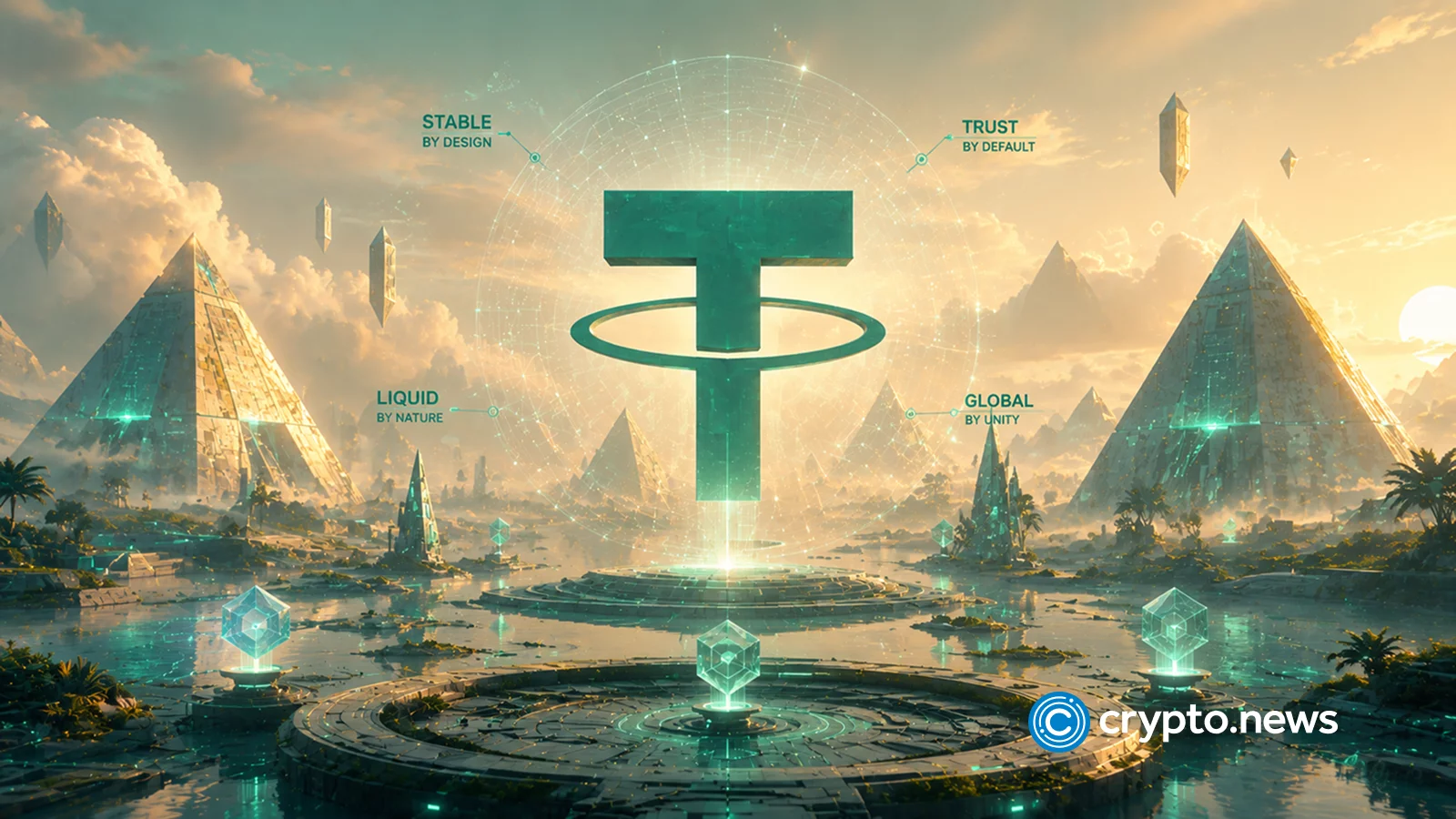
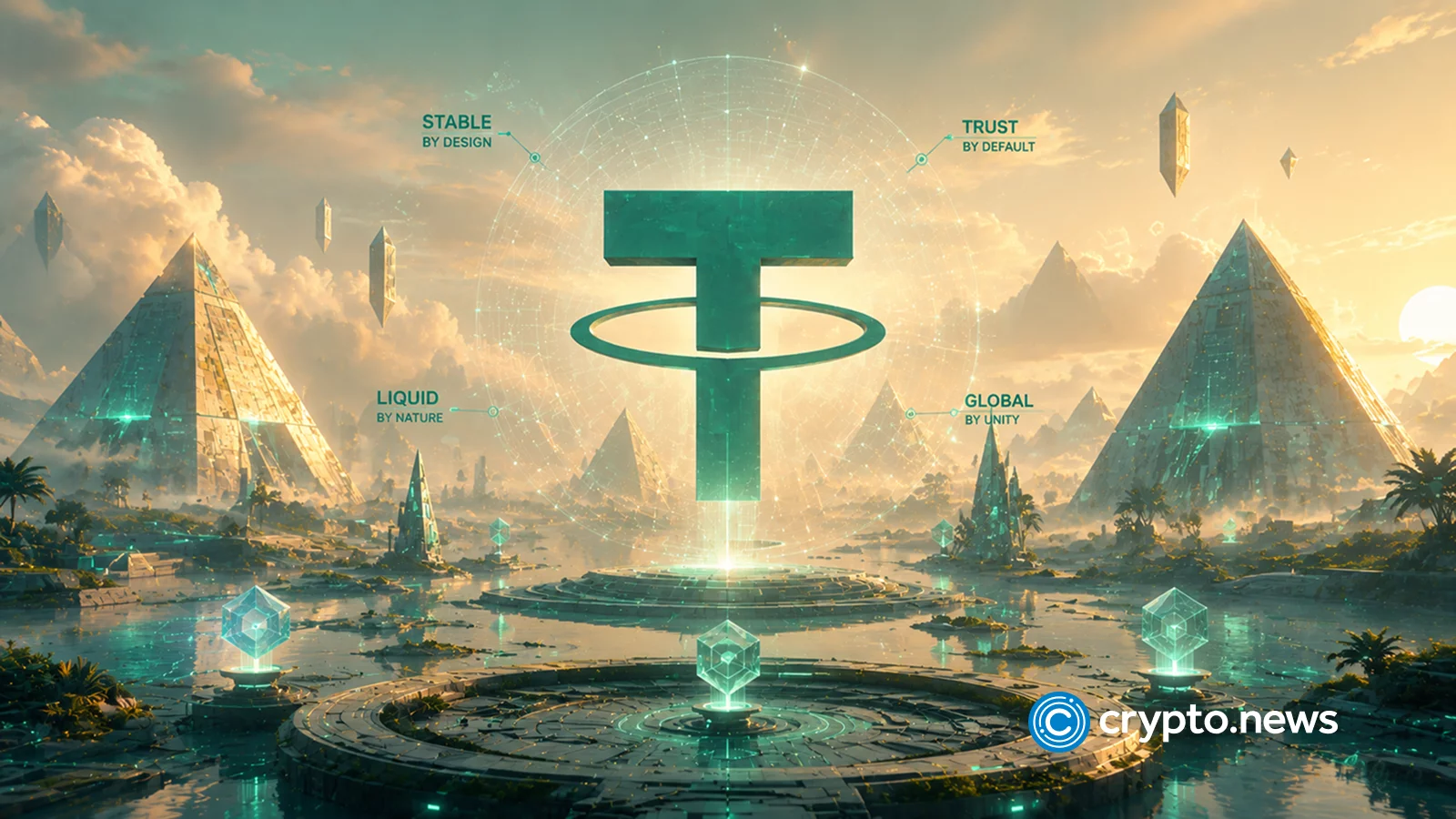
Tether has tested its decentralized peer-to-peer search technology by storing the full Wikipedia archive across 100 distributed nodes, as the USDT issuer works on a system designed to remain available without relying on centralized search infrastructure.
Summary
- Tether is developing a decentralized peer to peer search engine designed to operate across thousands of distributed nodes.
- The team has stored and searched the full Wikipedia archive across 100 nodes in its test environment.
- CEO Paolo Ardoino said the system uses fault tolerant structures to keep data available and resistant to censorship.
- The search project extends Tether’s work on peer to peer software alongside products including Keet and its mining infrastructure.
According to Tether CEO Paolo Ardoino, the company’s P2P team is developing what he called the “Unstoppable Search Engine,” which is designed to scale across thousands of nodes while allowing data to organize itself through fault-tolerant structures.
Ardoino shared the latest test results on Sept. 8, showing a working search interface connected to 100 nodes. The full Wikipedia archive was distributed across the test network and remained searchable, with Ardoino describing the system’s performance as “insane.”
The latest demonstration builds on Hypersearch, a decentralized search engine that Ardoino first disclosed in April. The project uses distributed infrastructure instead of keeping the search index and query process under a single centralized operator.
Tether search engine runs Wikipedia across 100 nodes
In the latest test, Tether distributed Wikipedia’s archive across 100 separate nodes and demonstrated searches being processed through the network.
The interface shown by Ardoino displayed Wikipedia search results alongside network information, including the nodes participating in the test. Tether is developing the architecture to scale horizontally across thousands of nodes while maintaining high availability when individual participants leave the network or become unavailable.
Fault-tolerant structures are being used to let the data organize across the distributed system, according to Ardoino. The design is intended to make the search service resistant to censorship while reducing its dependence on any individual server or network participant.
Development remains underway, with Ardoino saying the team’s progress has been “impressive.” Tether has not announced a public release date for the search engine or detailed when users outside its testing environment will gain access.
Hypersearch was first disclosed on April 7, when Ardoino described it as a decentralized search engine based on distributed hash table technology. A DHT allows information to be stored and located among network participants without requiring one central directory to handle every request.
The project uses HyperDHT, part of the peer-to-peer technology associated with the Holepunch software stack. HyperDHT provides a way for peers to find one another and exchange information directly, forming part of the infrastructure Tether has been using across several of its software projects.
Tether is currently recruiting engineers for its P2P search team, with its job listing seeking experience in distributed databases, conflict-free replicated data types, search architecture and P2P networking. The role specifically covers ranking algorithms, inverted indexes, lexical and semantic search, NAT traversal, encryption and network protocol optimization.
The listing names HyperDHT, Hyperswarm, Hypercore, Hyperbee, Hyperdrive and UDX among the Holepunch technologies used by the team.
Hypersearch extends Tether’s P2P software work
Search is not Tether’s first attempt to build software around peer-to-peer architecture.
Tether and Bitfinex previously backed Holepunch and its encrypted communication application Keet. As crypto.news previously reported, Keet was developed to support direct audio calls, messaging and file transfers through a distributed network without routing communication through conventional centralized infrastructure.
Tether later applied similar ideas to its Bitcoin mining operations. Its Mining OS was released as open-source software in February 2026, with encrypted peer-to-peer networking and support for operations ranging from individual mining setups to industrial facilities.
The company followed that work in April with an open-source Mining Development Kit designed to provide hardware control and monitoring through a JavaScript software development kit and React user interface library. The system was built to work across Windows, macOS and Linux and support operations ranging from home mining rigs to large mining facilities.
Tether’s earlier Moria mining platform had already used Holepunch technology to connect components through a P2P model. During testing in 2023, the company said write actions required multi-signature approval while the platform combined peer-to-peer communication with Internet of Things technology.
Hypersearch takes the same distributed approach into information retrieval. Instead of concentrating the searchable dataset and processing infrastructure in one place, its architecture divides those functions among participating nodes.
The Wikipedia deployment provides a controlled test of that model using a large existing collection of documents. Tether has not disclosed how the engine would crawl or index the wider web, how ranking would work at public scale, or what mechanisms would be used to deal with spam, manipulated results and conflicting data across a large open network.
Tether is building more software outside stablecoins
The search project is part of a series of software products Tether has developed outside the USDT business.
Its work has extended into artificial intelligence through QVAC, where the company has been developing tools intended to run models locally instead of depending on centralized cloud infrastructure. In April, Tether released the QVAC SDK, an open-source toolkit for running AI applications directly on consumer devices.
QVAC Fabric supports text, speech, vision and translation workloads, while Holepunch technology is used for peer-to-peer model distribution and delegated inference. Tether has said its development plans include decentralized model training and fine-tuning alongside toolkits for other computing applications.
That architecture follows earlier work to move AI processing onto user hardware. In March, Tether said QVAC Fabric had been used to fine-tune models with up to 3.8 billion parameters on devices including the Pixel 9, Galaxy S25 and iPhone 16, while models of up to 13 billion parameters had been tested on the iPhone 16.
Tether’s search team is working on related distributed-system problems, including replicated data, networking and information retrieval. Its current engineering recruitment specifically seeks developers familiar with Kademlia-style DHT systems, CRDTs and the Holepunch stack, alongside conventional search concepts such as ranking, recall, precision and inverted indexes.
For now, the search engine remains under development. Ardoino’s latest demonstration shows the full Wikipedia archive running across 100 distributed nodes, while Tether is designing the underlying architecture to eventually operate across thousands.
